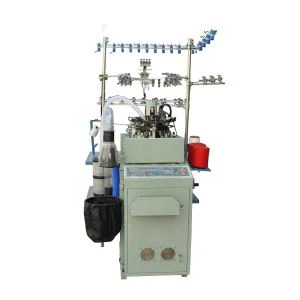
Hey there! As a supplier of Plain Sock Machines, I often get asked about the synchronization accuracy of these machines. It's a crucial aspect that can significantly impact the quality and efficiency of sock production. So, let's dive right into it and explore what synchronization accuracy really means in the context of a Plain Sock Machine.
What is Synchronization Accuracy?
Synchronization accuracy refers to how well different components of the Plain Sock Machine work together in harmony. In a sock - making process, there are multiple moving parts involved, such as the needles, yarn feeders, and cam systems. For a sock to be produced correctly, all these components need to operate in a synchronized manner.
Think of it like a well - choreographed dance. Each dancer (component) has their own steps, but they all need to move at the right time and in the right sequence to create a beautiful performance. In the case of a Plain Sock Machine, if the synchronization is off, it can lead to a whole host of problems.
Why is Synchronization Accuracy Important?
Quality of Socks
The most obvious reason is the quality of the socks produced. When the machine components are synchronized accurately, the stitches are uniform, and the sock has a consistent texture. If there's a lack of synchronization, you might end up with uneven stitches, holes, or even misshapen socks. No one wants to buy socks that look like they were made by an amateur, right?
Production Efficiency
Accurate synchronization also means higher production efficiency. A well - synchronized machine can produce socks at a faster rate without any interruptions. If the components are out of sync, the machine might stop frequently to correct errors, which slows down the production process and increases costs.
Yarn Usage
Proper synchronization helps in optimizing yarn usage. When the machine is working in harmony, it can use the yarn more efficiently, reducing waste. This is not only good for the environment but also for the bottom line of the sock - making business.
Factors Affecting Synchronization Accuracy
Mechanical Wear and Tear
Over time, the mechanical parts of the Plain Sock Machine can wear out. This can cause misalignments and affect the synchronization. For example, the needles might not move as smoothly as they used to, or the cam system might not be functioning correctly. Regular maintenance and replacement of worn - out parts are essential to maintain synchronization accuracy.
Electrical and Electronic Systems
Many modern Plain Sock Machines rely on electrical and electronic systems to control the operation of the components. Any glitches in these systems can disrupt the synchronization. Software bugs, sensor malfunctions, or power supply issues can all lead to problems.
Operator Skill
The operator of the machine also plays a crucial role. A skilled operator can detect early signs of synchronization problems and take corrective action. They need to be familiar with the machine's settings and know how to adjust them to maintain accuracy.
Measuring Synchronization Accuracy
There are several ways to measure the synchronization accuracy of a Plain Sock Machine. One common method is to use sensors to monitor the movement of the components. These sensors can detect the position and speed of the needles, yarn feeders, and other parts. By analyzing the data from these sensors, we can determine if the components are working in sync.
Another way is to visually inspect the socks produced. If the socks have consistent stitches and a uniform appearance, it's a good sign that the machine is synchronized accurately. However, this method is more subjective and might not be as precise as using sensors.
Improving Synchronization Accuracy
Regular Maintenance
As I mentioned earlier, regular maintenance is key. This includes cleaning the machine, lubricating the moving parts, and replacing worn - out components. By keeping the machine in good condition, we can minimize the chances of synchronization problems.
Updating Software
If the machine has an electronic control system, updating the software can improve synchronization accuracy. Software updates often include bug fixes and performance enhancements that can optimize the operation of the machine.
Operator Training
Providing proper training to the operators is essential. They should be trained on how to operate the machine correctly, how to detect synchronization problems, and how to make adjustments. A well - trained operator can make a big difference in the performance of the machine.
Related Machines
If you're in the sock - making business, you might also be interested in other types of knitting machines. For example, the Automatic Sock Linking Machine is used to join the toe of the sock, which is an important step in the production process. The Fishing Rod Sleeve Knittting Machine is designed to produce sleeves for fishing rods, and the Pantyhose Sock Knitting Machine is used for making pantyhose.
Conclusion
In conclusion, the synchronization accuracy of a Plain Sock Machine is a critical factor in sock production. It affects the quality of the socks, the production efficiency, and the yarn usage. By understanding the factors that affect synchronization accuracy, measuring it accurately, and taking steps to improve it, we can ensure that the machine operates at its best.
If you're interested in purchasing a Plain Sock Machine or have any questions about synchronization accuracy, feel free to reach out. We're here to help you make the most of your sock - making business.


References
- Industry reports on sock - making machinery
- Manufacturer's manuals for Plain Sock Machines
- Research papers on textile machinery synchronization