As a supplier from a lifting belts factory, I often get asked about the production capacity of a typical lifting belts factory. In this blog, I'll delve into this topic, sharing insights based on my experience in the industry.
Understanding the Basics of Lifting Belts
Before we discuss production capacity, it's essential to understand what lifting belts are. Lifting belts are crucial tools in various industries, including construction, manufacturing, and logistics. They are designed to securely lift and move heavy loads, ensuring safety and efficiency in the workplace. Lifting Belts come in different types, such as polyester lifting belts, nylon lifting belts, and round slings, each with its unique characteristics and applications.
Factors Affecting Production Capacity
The production capacity of a lifting belts factory is influenced by several factors. Let's take a closer look at some of the key ones:
1. Machinery and Equipment
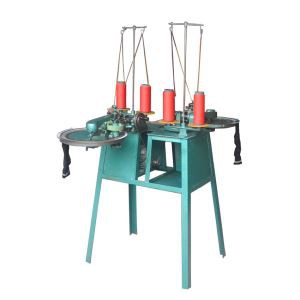
The quality and quantity of machinery and equipment play a significant role in determining production capacity. Modern lifting belts factories are equipped with advanced weaving machines, cutting tools, and testing equipment. These machines can produce lifting belts with high precision and efficiency. For example, a state - of - the - art weaving machine can produce a large number of belts in a relatively short period. The more advanced and numerous the machines, the higher the production capacity.
2. Raw Materials
The availability and quality of raw materials are also crucial. Lifting belts are typically made from high - strength fibers such as polyester and nylon. A reliable supply of these raw materials is necessary to maintain a consistent production rate. If there are shortages or quality issues with the raw materials, it can significantly impact production capacity. For instance, if a factory relies on a single supplier for a particular type of fiber and that supplier experiences production problems, the factory may have to slow down or halt production.
3. Labor Force
The size and skill level of the labor force are important factors. Skilled workers are needed to operate the machinery, perform quality control, and handle other aspects of the production process. A well - trained and efficient workforce can increase productivity and output. Additionally, the number of workers available also affects how much can be produced. If a factory has a large number of experienced workers, it can produce more lifting belts in a given time frame.
4. Production Processes
Efficient production processes can enhance production capacity. A well - organized factory will have streamlined processes for each stage of production, from raw material handling to final product packaging. For example, a factory that has optimized its cutting and sewing processes can produce belts more quickly and with fewer errors. Continuous improvement in production processes through techniques like lean manufacturing can also lead to increased capacity over time.
Measuring Production Capacity
Production capacity can be measured in different ways. One common method is to calculate the number of lifting belts produced per day, week, or month. For example, a small - scale lifting belts factory might be able to produce 500 belts per day, while a large - scale factory could produce several thousand. Another way to measure capacity is in terms of the total weight of the belts produced. This is particularly relevant when dealing with heavy - duty lifting belts.
Let's assume a factory has a production line that can produce 100 belts per hour. If the factory operates for 8 hours a day, 5 days a week, the weekly production capacity would be 100 x 8 x 5 = 4000 belts. However, this is a theoretical capacity, and in reality, factors such as machine breakdowns, maintenance, and quality control checks can reduce the actual output.
Typical Production Capacity Ranges
The production capacity of a typical lifting belts factory can vary widely depending on its size and scale.
Small - Scale Factories
Small - scale lifting belts factories usually have a production capacity of a few hundred to a couple of thousand belts per month. These factories may be family - owned or operate on a local level. They often focus on producing a limited range of lifting belts, catering to niche markets or local customers. Their production processes may be more manual, and they may have a smaller workforce.
Medium - Scale Factories
Medium - scale factories can produce anywhere from a few thousand to tens of thousands of belts per month. They typically have more advanced machinery and a larger labor force. These factories are often able to offer a wider range of products and may serve regional or national markets. They may also have more sophisticated quality control systems in place.
Large - Scale Factories
Large - scale lifting belts factories have the highest production capacity, often producing hundreds of thousands or even millions of belts per year. These factories are usually part of large corporations and have state - of - the - art facilities. They can handle large - volume orders and may export their products globally. They invest heavily in research and development to improve their products and production processes.


Meeting Market Demand
As a supplier, it's crucial to understand market demand and adjust production capacity accordingly. If there is a high demand for lifting belts in the construction industry due to a boom in building projects, the factory may need to increase its production capacity. This can be achieved by adding more machinery, hiring additional workers, or improving production processes.
On the other hand, if the market experiences a slowdown, the factory may need to reduce production to avoid overstocking. This requires careful planning and forecasting to ensure that the factory can maintain a balance between supply and demand.
Quality Control and Production Capacity
While production capacity is important, quality control cannot be overlooked. A factory that produces a large number of low - quality lifting belts will not be successful in the long run. Quality control measures are essential to ensure that the belts meet industry standards and customer requirements.
This includes testing the strength, durability, and safety of the belts. For example, lifting belts should be able to withstand a certain amount of weight without breaking. A factory with a high - quality control system may have slightly lower production capacity compared to one that cuts corners on quality, but it will have a better reputation and more satisfied customers.
Contact for Procurement
If you are in the market for high - quality lifting belts, I encourage you to reach out to us. We have the production capacity to meet your needs, whether you are a small business looking for a few belts or a large corporation with a high - volume order. Our team of experts can work with you to understand your specific requirements and provide the best solutions. Don't hesitate to contact us for procurement and start a fruitful business relationship.
References
- Smith, J. (2018). "Lifting Belts: A Comprehensive Guide". Industrial Equipment Journal.
- Johnson, A. (2019). "Optimizing Production Capacity in Manufacturing". Manufacturing Insights.
- Brown, C. (2020). "Quality Control in Lifting Belt Production". Safety and Standards Magazine.