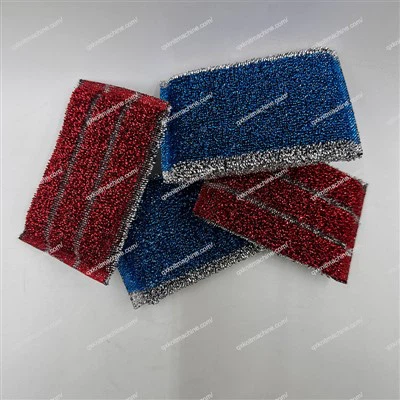
Nylon monofilament yarn is a remarkable material that has found wide - ranging applications across various industries. As a supplier of Nylon Monofilament Yarn, I am excited to share in - depth knowledge about this unique product.
Definition of Nylon Monofilament Yarn
Nylon monofilament yarn is a single, continuous strand of nylon fiber. Unlike multifilament yarns, which are composed of multiple smaller filaments twisted together, monofilament yarns consist of just one long, unbroken fiber. Nylon, the base material, is a synthetic polymer known for its high strength, toughness, and resistance to abrasion.
The process of manufacturing nylon monofilament yarn involves melting nylon resin and extruding it through a spinneret with a single hole. This extrusion process gives the yarn its uniform diameter and smooth surface. The diameter of nylon monofilament yarn can vary significantly, from very fine filaments used in delicate applications to thicker ones for heavy - duty purposes.
The physical properties of nylon monofilament yarn are what make it so versatile. It has excellent tensile strength, meaning it can withstand a large amount of pulling force without breaking. This property makes it suitable for applications where durability is crucial. Additionally, nylon has a high melting point, which allows it to maintain its integrity under high - temperature conditions. It is also resistant to chemicals and UV radiation to a certain extent, making it suitable for both indoor and outdoor use.
Applications of Nylon Monofilament Yarn
Textile Industry
In the textile industry, nylon monofilament yarn is used for a variety of purposes. One of the common applications is in the production of 140D Nylon Yarn For Hair Band. The smoothness and strength of the monofilament yarn make it ideal for creating hair bands that can withstand repeated use and stretching. It also provides a shiny appearance, enhancing the aesthetic appeal of the hair accessories.
Nylon monofilament yarn is also used in knitting. High Elastic Nylon Yarn For Knitting is popular among knitters as it offers elasticity and durability. Knitted items made from this yarn can retain their shape even after multiple washes and wears.
Fishing Industry
The fishing industry is another major consumer of nylon monofilament yarn. Fishing lines made from nylon monofilament are strong, flexible, and nearly invisible underwater. The high tensile strength allows fishermen to catch large fish without the line breaking easily. The smooth surface of the monofilament reduces friction in the water, enabling the line to cast further and more accurately.
Industrial Applications
In industrial settings, nylon monofilament yarn is used in conveyor belts, filters, and brushes. In conveyor belts, the strength and abrasion resistance of the yarn ensure that the belts can handle heavy loads and continuous operation. In filters, the fine and uniform structure of the monofilament allows for efficient filtration of particles. Brushes made with nylon monofilament are used for cleaning, polishing, and deburring in various manufacturing processes.
Advantages of Nylon Monofilament Yarn
Durability
As mentioned earlier, nylon monofilament yarn is extremely durable. It can withstand harsh environmental conditions, including exposure to moisture, chemicals, and mechanical stress. This durability translates into a longer lifespan for products made from the yarn, reducing the need for frequent replacements.


Versatility
The versatility of nylon monofilament yarn is a significant advantage. Its wide range of applications across different industries demonstrates its adaptability. From delicate hair accessories to heavy - duty industrial components, nylon monofilament yarn can be tailored to meet various requirements.
Cost - effectiveness
Compared to some other materials, nylon monofilament yarn offers a cost - effective solution. Its long lifespan and low maintenance requirements make it a more economical choice in the long run. Additionally, the manufacturing process of nylon monofilament yarn is relatively efficient, which helps keep the production costs down.
Quality Control in Nylon Monofilament Yarn Production
As a supplier of Nylon Monofilament Yarn, we understand the importance of quality control. We implement strict quality control measures at every stage of the production process.
Starting from the selection of raw materials, we ensure that only high - quality nylon resin is used. During the extrusion process, we closely monitor the temperature, pressure, and speed to ensure that the yarn has a consistent diameter and quality. After production, the yarn undergoes a series of tests, including tensile strength testing, diameter measurement, and surface inspection.
These quality control measures ensure that our customers receive nylon monofilament yarn that meets or exceeds their expectations. We are committed to providing products that are reliable, durable, and of the highest quality.
Customization Options
We also offer customization options for our nylon monofilament yarn. We understand that different customers have different requirements, and we are willing to work with them to develop customized solutions.
For example, we can adjust the diameter of the yarn according to the specific application. If a customer needs a finer yarn for a delicate textile product, we can produce it. We can also modify the properties of the yarn, such as its elasticity or color, to meet the customer's needs.
Conclusion
Nylon monofilament yarn is a remarkable material with a wide range of applications and numerous advantages. Its strength, durability, and versatility make it a popular choice in various industries. As a supplier, we are dedicated to providing high - quality nylon monofilament yarn that meets the diverse needs of our customers.
If you are interested in purchasing nylon monofilament yarn or have any questions about our products, please feel free to contact us for further discussion. We look forward to the opportunity to work with you and provide you with the best solutions for your needs.
References
- "Synthetic Fibers: Nylon" by Textile Institute.
- "Handbook of Textile Fibers: Man - Made Fibers" by B. R. Gupta.